



A shirt can be perfect and still have no friends in your closet. The color is lovely. The cut is interesting. Then you bring it home and discover it works with exactly one pair of trousers you do not own.
A virtual outfit try-on moves the decision from “Do I like this item?” to “Can I make a full look with it?” If you searched “virtual outfit try on,” this is the useful version of that idea. Clothes are worn in combinations, not in isolated product cards floating on white backgrounds.
Start with a real reason to build the outfit
Name the occasion or job. You might need an easy office outfit, a wedding guest look, a travel day uniform, a date-night option, or something that makes a difficult pair of shoes earn its shelf space.
Then set three limits. Consider weather, dress code, walking, sitting, outerwear, and anything you refuse to wear. A useful brief might be “casual dinner, cool evening, comfortable shoes.” Another might be “client meeting, polished, works with my navy coat.”
Limits create outfits faster than inspiration. They remove the options that would look excellent for six minutes in another person’s life.
Choose an anchor piece
Every outfit needs one place to start. Use the item you are considering buying, the hardest piece to style, or the garment you definitely want to wear. That is the anchor.
If the anchor is a printed skirt, the rest of the outfit supports its color and shape. If it is an oversized blazer, the base layer and trousers need to balance the volume. If it is a bright dress, the shoes and coat should not begin separate campaigns for attention.
Take a clean photo of the anchor or save its product image. If you already own it, a hanger photo against a plain wall works. For a store item, use a front-facing screenshot with the interface cropped away.
Use your own closet for the supporting pieces
Before shopping for a complete look, list what you already own. Your favorite jeans, reliable black boots, everyday coat, comfortable bra, and bag are valuable constraints. A new item that works with them is more likely to become part of your wardrobe.
Photograph two or three supporting pieces or use source photos where you are already wearing them. You do not need to digitize every sock. Start with the pieces that affect color, silhouette, and practicality.
Build the look in layers
Preview the main combination first. For example, test the new blouse with your trousers. Save the result. Then add the blazer. Save again. Finally, consider shoes or accessories.
Working in stages makes it easier to see what improves the outfit and what simply adds more outfit. It also helps you notice when a later edit changes the original garment too much.
- Anchor garment.
- Base or bottom.
- Outer layer.
- Shoes.
- One or two useful accessories.
This order follows visual impact. Earrings rarely rescue trousers that fight the jacket.
Check the silhouette from head to toe
Look at where the outfit creates volume and where it narrows. An oversized top may need a straighter bottom. Wide trousers can work with a roomy jacket, but the base layer and visible waist often determine whether the combination feels intentional.
Pay attention to hem relationships. A long top under a cropped jacket creates several horizontal lines. A midi skirt with ankle boots may shorten the visible leg more than expected. A coat that ends close to a dress hem can look tidy, while two competing lengths may feel busy.
These are exactly the decisions a full-look preview handles better than separate product photos.
Use color repetition, not exact matching
A coordinated outfit does not need three pieces in the same shade. Repeat a color once in a smaller amount, or use neighboring tones. A brown bag can connect with warm buttons. A burgundy shoe can echo a print. Denim can act as a neutral while the top and jacket carry the color story.
When the outfit feels disconnected, look for one bridge color. When it feels overly matched, remove one repeat. You are getting dressed, not assembling a hotel uniform.
Test the outerwear version
If you will leave the house in a coat, include it. Outerwear changes the first impression and may cover the part of the outfit you spent the most time styling. It also changes volume around the shoulders and length through the body.
Try the coat open and closed if both matter. Make sure the shoes work with the outer layer, not only with the indoor outfit. A delicate dress and heavy practical coat can coexist, but you should see the relationship before the event.
Make three versions with one meaningful change
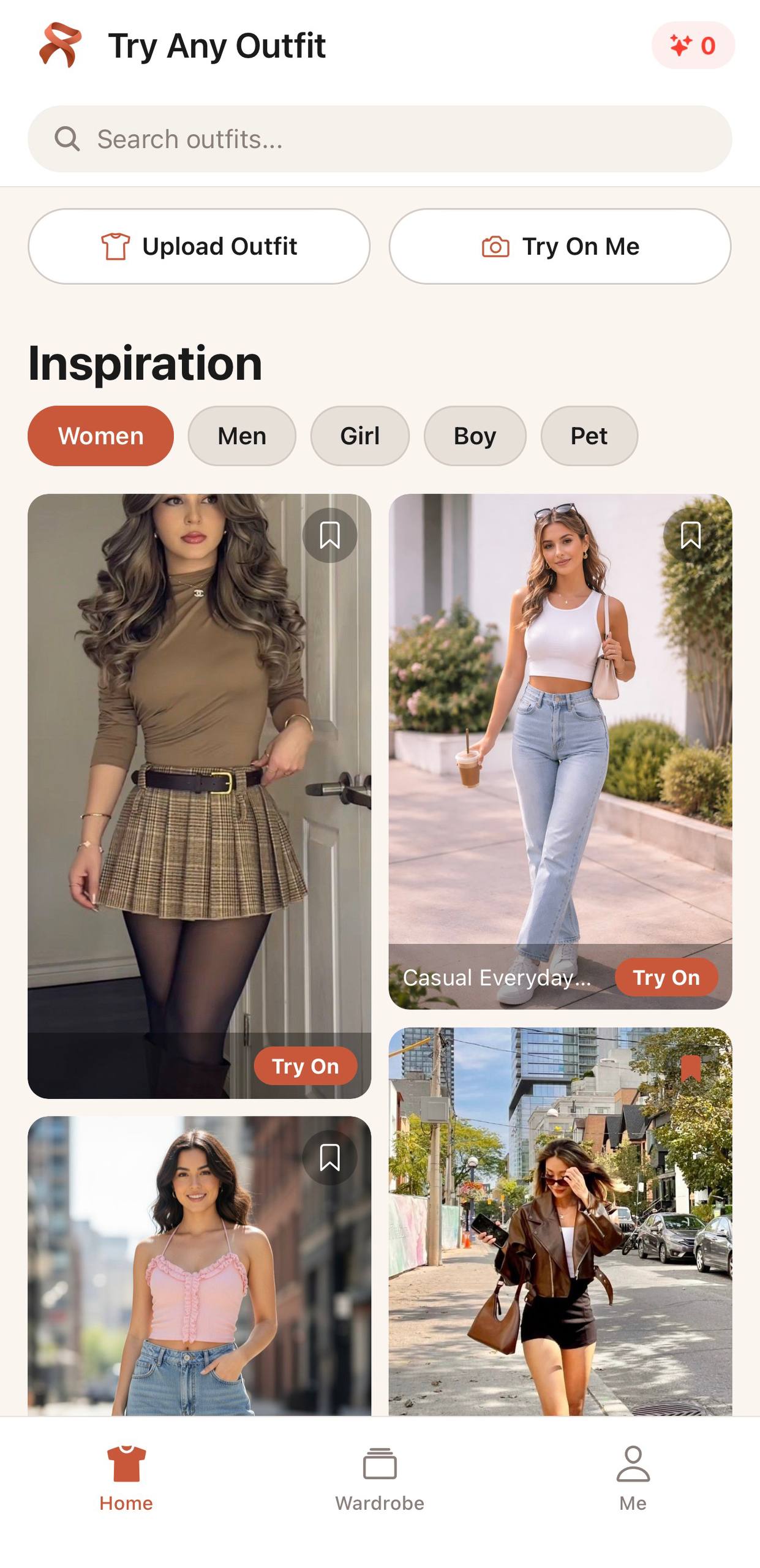
Once the basic outfit works, create three versions. Change only the factor you are deciding about. Compare sneakers, ankle boots, and loafers. Compare a cropped jacket, long blazer, and cardigan. Compare three colors of the same dress.
Keeping the rest stable tells you which change helped. If every version uses a different pose, top, coat, and shoe, you have created three moods, not a comparison.
Run the closet-orphan test
Before buying the new piece, build at least two full outfits with items you own. Three is better for basics. One special-event garment may only need one excellent use, but be honest about that when deciding what it is worth.
If the item requires new shoes, a special bra, different trousers, and a coat that matches, include those costs. The $45 top is not a $45 decision when it arrives with a four-person entourage.
Check the physical facts last
The preview helps with visual compatibility. It does not confirm size, comfort, fabric, or construction. Check garment measurements, stretch, lining, opacity, care instructions, and reviews. Compare dimensions with a similar item from your closet.
For a layered outfit, make sure the real pieces physically fit together. A slim jacket sleeve may not go over a thick knit. High-rise trousers may meet a cropped top differently depending on the actual rise. Boots may not fit under the trouser opening.
A full-look formula that works
- One anchor: the item carrying the idea.
- One base: the piece that makes it wearable.
- One practical layer: jacket, cardigan, or coat.
- One realistic shoe: chosen for the actual plan.
- One repeat: a small color or texture connection.
You can add more, but you do not need more to test whether a look works.
Take one final look at the outfit without the new item. If your existing clothes already solve the brief, that is useful information too. A preview should make buying easier when the piece earns a place, and make skipping easier when it does not.
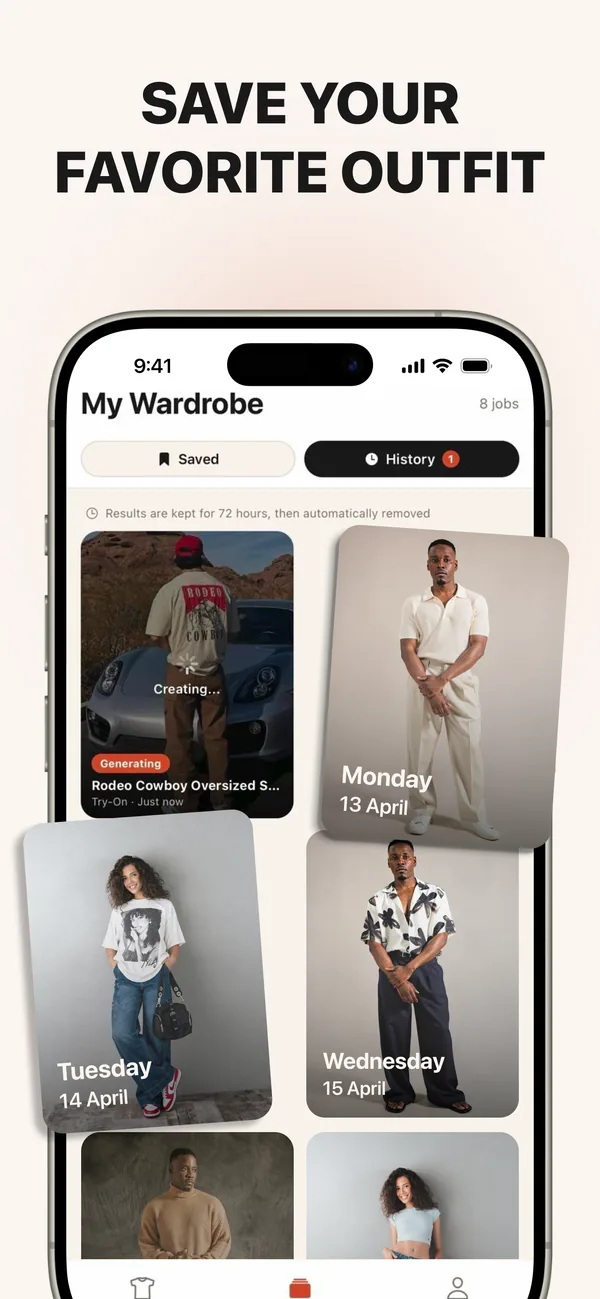
Save outfits you can repeat
Name each saved result by occasion or formula: “navy blazer work dinner,” “green dress wedding,” or “white shirt travel day.” A useful wardrobe is a collection of ready decisions. A gallery called “cool outputs” is pleasant and strangely unhelpful at 7:40 a.m.
Try the strongest look on a seated photo when comfort matters. Check it with the coat. Then put the complete outfit in one place so you can repeat it.
Build a virtual outfit try-on with one item you are considering and two pieces you already own. If an event is driving the decision, use the event outfit guide to account for the venue, weather, and time spent sitting.
What the wardrobe screen adds
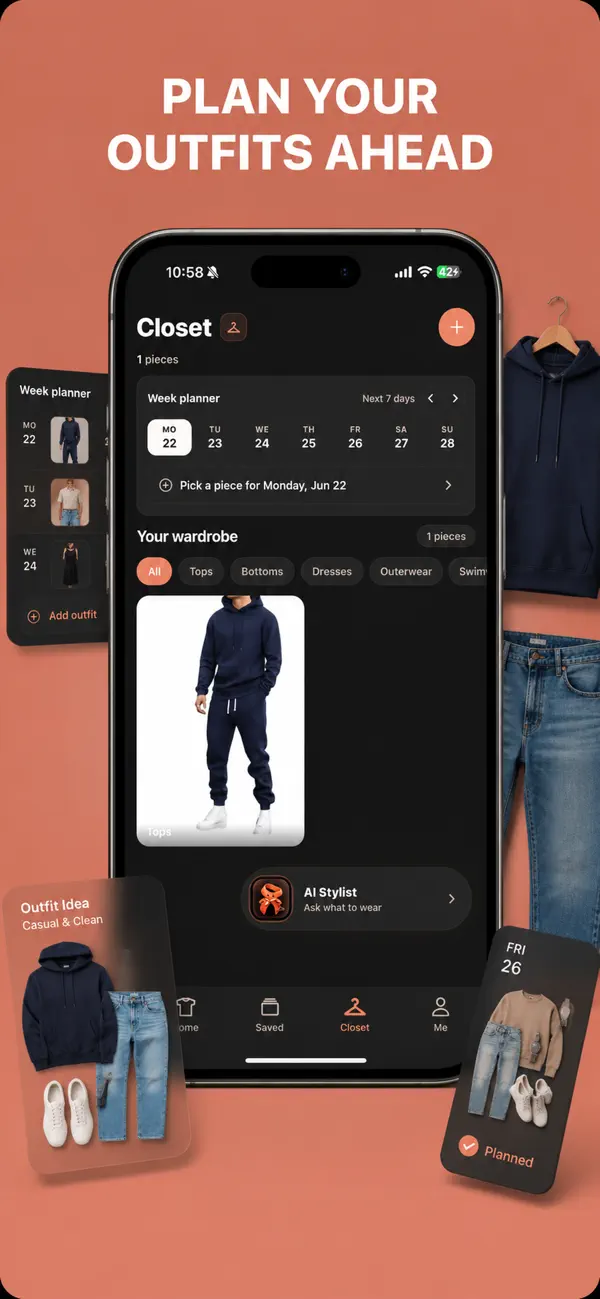
The current wardrobe screen places saved pieces beside a weekly planner. That is useful evidence for full-look planning because an outfit has to work beyond one polished result. A good candidate should fit the rest of your closet and make sense on the day you expect to wear it.
Use the event outfit guide when a venue or dress code shapes the decision. Use the before-checkout guide before ordering the missing piece.